A buyer's attorney calls two weeks before closing on a Main Street property in Farmington and asks for the Certificate of Appropriateness on the rear deck the sellers added last spring. The sellers pulled a standard building permit. Nobody mentioned a second layer of review. Now the closing date is soft, the title company wants documentation that doesn't exist, and everyone is learning about the Farmington Historic District Commission at the worst possible moment.
That scenario is avoidable, but only if you understand something most generic guides to buying historic homes never mention: the boundary of this specific district is not fixed history. It moved as recently as last year. And the rules inside it are not one uniform wall of restriction, they're a graduated system with real carve-outs and at least one financial incentive that cuts the other way.
The Line Moved in 2025
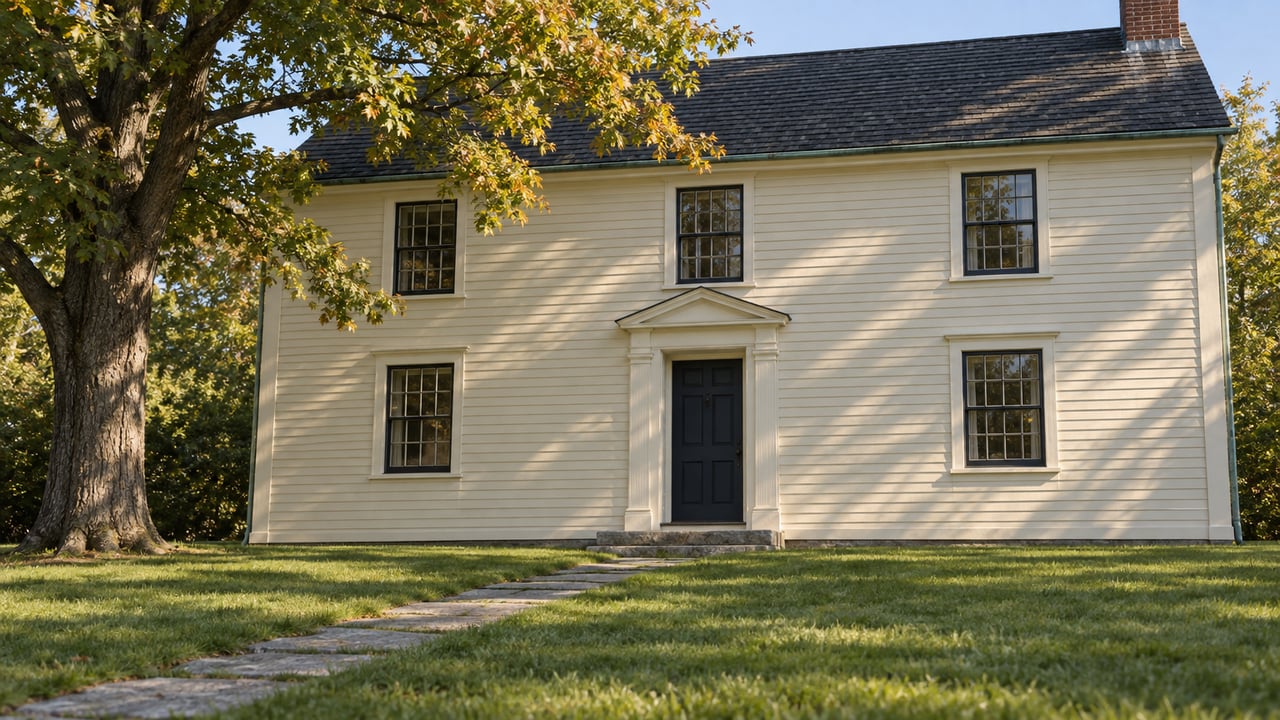
Farmington's historic district was established in 1964 to protect the character of the village center, and it now covers roughly 115 houses built before 1835 alongside three centuries of later architecture, from Greek Revival to mid-19th century Victorians. Landmarks inside the boundary include the Stanley-Whitman House, the Hillstead Museum, the First Church meeting house, and the buildings of Miss Porter's School. The Elm Tree Inn, a stopping place for Washington and Rochambeau, was added to the district in 2007.
That last detail matters more than it looks. The district has expanded before, and it did it again recently. The official district map was approved by the Town Council on June 9, 2025, with an effective date of July 9, 2025. If you're relying on a map you saved from a listing five years ago, or on the assumption that a parcel just off Main Street has always sat outside the line, you're working from outdated information. Before you list a Farmington property near the village center, or write an offer on one, the current map is worth a direct look rather than a guess based on what a neighbor told you.
The Commission Deciding Your Case Lives Down the Street
Unlike a zoning variance heard by staff planners, Farmington's Historic District Commission is built to be local by design. The ordinance sets it at five regular members and three alternates, and requires that at least three regular members and two alternates actually reside within the district boundary. They serve without pay, elect their own chair and vice chair annually, and hold public hearings on each application for a Certificate of Appropriateness.
Practically, this changes how you should approach a project. You are not petitioning a distant office. You are presenting to people who will walk past the result on their way to church or the market. That cuts both ways: neighbors on a review board can be more attuned to context and precedent than a generic zoning desk, but they also notice details a faraway reviewer might miss. A design that respects the streetscape tends to move faster than one that doesn't, regardless of how well it meets code.
What Actually Needs a Certificate of Appropriateness
The most common misunderstanding is scope. People assume the review only touches additions or major renovations. The ordinance is broader than that.
| Typically requires a Certificate of Appropriateness | Typically does not |
|---|---|
| Creating or enlarging a parking area |
That parking line surprises people the most. If a seller made this kind of change without going through the commission, it's the sort of thing that surfaces during a buyer's due diligence and stalls a deal exactly like the fence scenario above.
The Carrot Buried Inside the 90-Day Delay
Demolition gets treated in most historic-district writing as pure obstruction: you want to tear something down, the town says wait. Farmington's version has a wrinkle worth knowing if you're the one carrying a property that's more teardown than restoration candidate.
Under the ordinance, a demolition permit doesn't take effect for 90 days if the commission or the state historical commission is using that window to find a buyer willing to preserve or relocate the structure, or to propose some other alternative. During that same 90-day period, the town has the authority to abate all real property taxes on the structure.
That's not a detail most sellers factor into pricing a fixer near the village center. If you're weighing whether to list a marginal historic property as-is or push toward demolition, the tax abatement window is a real, if temporary, offset against the cost of that delay. It won't change the math on every deal, but it's the kind of lever a construction-minded advisor should be raising with you before you sign a listing agreement, not after.
Solar Is the Exception, Not the Rule
Ask most people what a historic district does to solar panels and they'll guess the commission blocks them outright to protect the roofline. State law says otherwise. Connecticut's Office of Legislative Research says state law requires the commission to approve a certificate for a solar energy system unless it finds the installation cannot go in without substantially impairing the historic character of the district.
That's a meaningfully different standard than blanket denial. It's presumptive approval with a narrow exception, not the reverse. For a buyer weighing long-term utility costs against the emotional pull of an antique Colonial on Mountain Road or School Street, that distinction is worth knowing before you rule a property out over an assumption that turns out to be wrong.
What's Actually in the Queue Right Now
The commission's pending applications aren't dramatic disputes over additions or teardowns. As of this year, the docket has included an exterior sign proposal at 769 Farmington Avenue, an application tied to a structure at 230 Main Street, and separate filings for properties on School Street. Most of what comes before this board is incremental: a sign, a small structure, a modification to something already approved. That's useful context if you're picturing a contentious public hearing every time a homeowner wants to change a window. The system runs on routine business far more often than it runs on conflict.
What This Means If You're Buying or Selling Inside the Line
If you're selling, pull together documentation for any exterior work done during your ownership, including anything that touched siding, roofing, signage, or parking. A missing certificate doesn't necessarily kill a deal, but it's far better to surface it before an attorney does during closing week. If you're buying, confirm the property's status against the current map rather than an assumption, and ask specifically whether any exterior changes since the last sale went through the certificate process.
If you're weighing a renovation, plan your timeline around a public hearing, not a same-week permit. And if you're carrying a property that's genuinely a demolition candidate, understand that the 90-day window is not just a delay to survive. It's a period where the tax bill on that structure can be reduced while alternatives are explored.
This is exactly the kind of detail that a construction and design background changes how you read. Jacek Mikolajczyk's team works with Farmington's historic inventory often enough to know where certificate history tends to get overlooked in a standard listing packet, and where it becomes a closing problem instead of a paperwork footnote. If you want a second opinion on what a specific Farmington address requires before you list it or write an offer, our Farmington neighborhood page is a starting point, and a conversation is a better one.
A Few Questions Worth Asking Before You Sign Anything
Has the district boundary changed since I last checked? Yes, as recently as 2025. Confirm your parcel's status against the current official map rather than an older version.
Do I need approval for something as minor as adding parking? Often, yes. Creating or enlarging a parking area, even for personal or occupational use, falls under the certificate requirement independent of standard zoning rules.
Will the commission block solar panels on a historic home? Not by default. State law requires approval unless the installation would substantially impair the district's historic character, which sets a fairly high bar for denial.
What actually happens if I want to demolish a structure in the district? A 90-day delay applies while the commission or the state historical commission looks for alternatives, but the town may abate property taxes on the structure during that same window.
Buying or selling inside a historic district doesn't have to mean guessing at what's required. It means asking the right questions early, to the right people. If you're weighing a move in or out of Farmington's village center, Jacek Mikolajczyk and the team can walk through what your specific address requires before you list, renovate, or write an offer.
This article is general information, not legal, tax or financial advice. Consult a qualified professional about your situation.