A buyer scanning listings for Glastonbury sees a single town-wide figure and assumes it describes one market. As of late May 2026, the average home value across town sat at $560,612, and asking prices in August 2026 carried a median around $549,000. That number feels like a starting point for a search. It isn't. It's an average of two markets that behave nothing alike, and the line between them runs underground, through a sewer main that stops well short of where most of Glastonbury's land actually is.
If you're comparing Glastonbury to other Hartford County towns on price alone, you're missing the mechanism that actually sets those prices: whether a given parcel sits on town sewer or depends on a septic system, and what the zoning code allows you to build once you know the answer.
The Number on the Portal Isn't the Number on the Ground
Break the town into its two halves and the picture changes fast.
| Sub-market | Median Sale Price | Window | Typical Time on Market |
|---|---|---|---|
| Glastonbury Center | $425,000 | 3 months ending May 2026 | around 22 days |
| South Glastonbury (ZIP 06073) | $517,000 | 3 months ending May 2026 | 21 to 40 days, depending on the tracker |
| South Glastonbury Historic District | $815,000 | 3 months ending May 2026 | comparable to or longer than the broader south side |
| Town-wide condos | around $348,000 | early 2026 | fastest-moving segment |
The spread between $425,000 in the Center and $815,000 in the Historic District isn't a rounding error. It's two different products being sold under one town name. And the time-on-market gap tells you something too: homes in the Center moved in roughly three weeks, while South Glastonbury listings, by most counts, sat closer to five or six. One tracker put South Glastonbury's overall median at $649,900 with an average 40 days to sell. Another pegged the ZIP at $517,000 with a 21-day median. The exact figure moves depending on which boundary and which month you pull, but every version tells the same story: South Glastonbury homes cost more and take longer, consistently, regardless of which data source you trust.
That's not a coincidence of geography. It's infrastructure.
Two Systems Under the Ground
Glastonbury's Water Pollution Control Authority owns and operates the town's public sewer system, but sanitary sewer service is only available in certain areas of town, and any extension, new connection, or alteration requires WPCA review, including impact studies and assessments of benefit for anyone hoping to extend the line to their property. That review process adds cost and time before a single shovel goes into the ground.
South Glastonbury, largely outside that service area, runs on septic. The town's Health Department permits and inspects every on-site system, and the physical requirements are specific: five feet of naturally occurring soil between bedrock ledge and the bottom of a leach field, two feet of soil between the leach field and the maximum groundwater level, and if groundwater can't be measured on the spot, monitoring during the state's wet season, February through May. That last requirement alone can push a sale timeline into the following season if a seller lists at the wrong time of year.
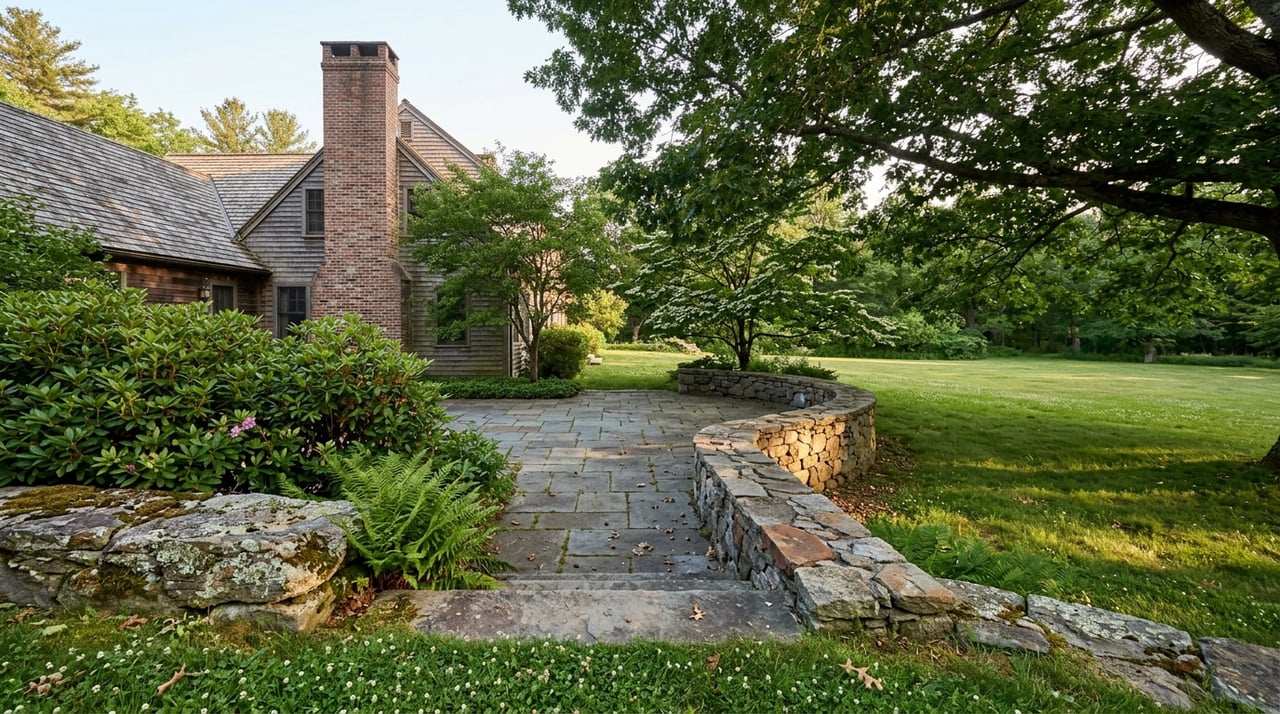
This isn't theoretical for South Glastonbury. The area sits on the kind of bedrock terrain that gives it postcard-worthy stone walls and ledge outcroppings, the same geology that shows up in listing language describing a South Glastonbury colonial "tucked against a dramatic natural rock ledge" on a 1.12-acre lot, or in the multi-acre parcels found in established neighborhoods like Kingswood Estates. That ledge is a selling point in a listing photo. It's also the exact condition the Health Department's five-foot rule was written for, and it's a large part of why septic evaluations, engineered systems, and occasionally a second round of testing show up in South Glastonbury contracts more often than in the Center.
For a buyer, that means budgeting for a septic inspection as a standard contingency, not an afterthought, and understanding that a system installed decades ago on a ledge lot may need more than a routine pump-out before a lender signs off. For a seller, it means getting ahead of that inspection before listing, rather than finding out mid-contract that the leach field needs work.
Zoning Locked In Two Different Products Before Any House Was Built
The sewer line explains the infrastructure gap. The zoning code explains why the two areas were built to different specifications in the first place.
Glastonbury's zoning regulations establish a Country Residence zone and a Rural Residence zone alongside a Town Center zone, each with its own lot size and development standards. Larger-lot zoning in the rural and country residence districts, paired with septic capacity limits, keeps South Glastonbury's inventory skewed toward bigger parcels and lower density. The Town Center zone, built around sewer access, supports smaller lots and tighter spacing, which is a large part of why Center inventory turns over faster at a lower absolute price even as its price per square foot holds close to South Glastonbury's.
Layer the South Glastonbury Historic District on top of that, and you add a design review step that most Center transactions never touch. Exterior changes to a historic district property typically go through architectural review before a permit is issued, which is one more reason those homes tend to take longer to close and often demand a premium once they do.
None of this shows up in a median price. All of it shows up in a purchase agreement.
What This Means If You're Actually Comparing the Two
If you're deciding between a $425,000 home in Glastonbury Center and a $650,000 to $815,000 home in South Glastonbury, you are not paying more for more square footage. You're paying for a different set of tradeoffs: lot size and privacy against a shorter commute to sewer-served, walkable amenities; septic self-sufficiency against the ongoing maintenance and inspection cadence that comes with it; historic character against a design review board that has a say in your next exterior project.
A few things worth doing before you write an offer on either side of that line:
- Ask directly whether the property is on town sewer or septic, and if septic, request the most recent pumping and inspection records.
- If the lot backs up to ledge or sits in a documented rock outcropping area, ask whether the septic system was engineered for reduced soil depth, since that can affect both permitting and future repair costs.
- If the property sits in the South Glastonbury Historic District, ask what exterior work, if any, has gone through design review in the past five years, and how long that process took.
- If you're a seller on septic, get the system inspected before listing rather than during attorney review. A clean report shortens the negotiation, and in a market where South Glastonbury homes already take longer to sell, that matters.
- If you're a seller in the Center weighing an addition, check the town's floor area ratio limits before promising a buyer expansion room. FAR calculations exclude things like open porches and garages, which can make more room available than a quick gut estimate suggests, or less, depending on what's already built.
A Few Questions Worth Asking Before You Commit
Is all of South Glastonbury on septic? No. Pockets closer to existing infrastructure may have sewer access, but the majority of the area's housing stock relies on individual septic systems regulated by the town's Health Department.
Does the Historic District designation lower resale value? The data doesn't suggest that. The South Glastonbury Historic District posted the highest median of any sub-area in this comparison over the three months ending May 2026. The tradeoff is process, not price.
Can I request town sewer be extended to my septic lot? You can ask, but it isn't automatic. Extensions go through the Water Pollution Control Authority, which reviews subdivision impact, conducts sewer impact studies, and assesses benefit costs to the property owner before any connection is approved.
Glastonbury's median price is a useful headline and a poor map. If you're comparing this town to others in Central Connecticut, or comparing one side of Glastonbury to the other, the number that matters isn't on the portal. It's underground, and it's written into the zoning code that decided what could be built above it.
If you're weighing a move into Glastonbury Center, South Glastonbury, or elsewhere in Hartford County, Jacek Mikolajczyk and the team at Valley Fine Homes can walk through what a specific address's sewer status, lot zoning, or historic district standing actually means for your timeline and your offer. Start with a look at the Glastonbury neighborhood page, or get a clearer read on where your current home fits with a home valuation. Let's connect before you write an offer on either side of that line.